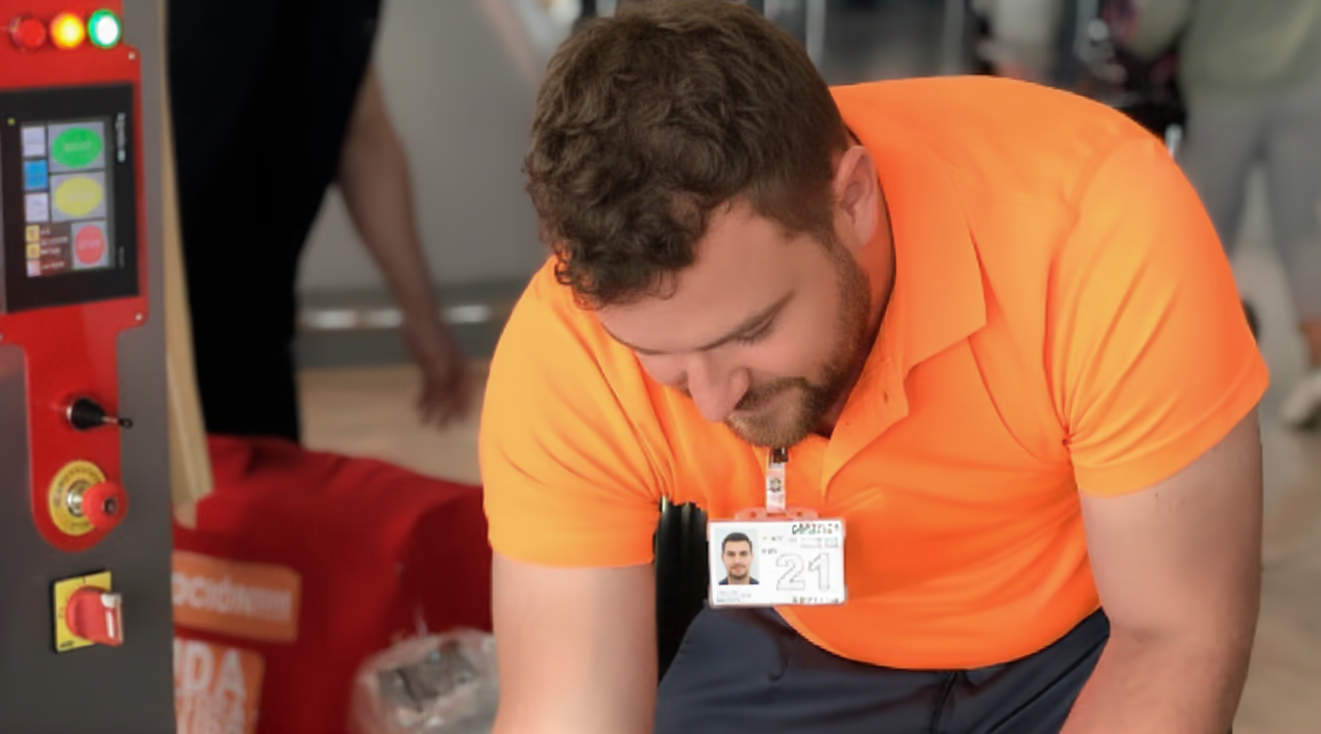

Interview with Andres Gutierrez, retail-sector specialist
Question: Andres, tell us a little about your career in retail.
Answer: I have been working in retail for more than 15 years, with a special focus on the airport environment. I have taken part in the opening and management of stores at several international airports, which has helped me understand how two fascinating worlds come together: aviation security and the passenger shopping experience.
Question: Airport retail is very particular. What makes it different from traditional retail?
Answer: The main difference is the environment. An airport is a highly regulated space where security is the priority. This directly affects store operations, from goods access to staff training. In addition, passengers shopping at an airport are in a special moment: they are usually travelling, have limited time and look for differentiated products, often premium or exclusive.
Question: How is security related to store operations?
Answer: Very directly. Employees working in restricted airport areas must know and comply with very specific security rules. That is why certifications such as those offered by avsec.info are key: they ensure staff are trained in the proper procedures and can perform their work without putting airport operations at risk.
Question: What advantages have you found in certifying your employees with avsec.info?
Answer: First, the peace of mind that they comply with security standards. Second, the flexibility of a digital platform that allows us to train and assess staff quickly, even when turnover is high, as often happens in retail. And third, knowing the rules and applying them carefully helps us avoid financial penalties.
Question: How do you see the future of airport retail?
Answer: I see strong growth in personalized shopping experiences. Stores are no longer just points of sale; they are spaces designed to surprise travellers. Digitalization and integration with airport services will also set the pace. But one thing will remain constant: security as the pillar of the entire operation.