UNESEV will deploy all its capabilities in Spain on Spanish aircraft, both on domestic and international flights, in order to provide a police response in the event of threats.
The Guardia Civil has presented the National In-Flight Security Escort Unit (UNESEV), known internationally as Air Marshals. The unit had already carried out several flights and will deploy all its capabilities in Spain on Spanish aircraft, both domestically and internationally, to provide a police response in the event of threats.
UNESEV was presented during the meeting of the International In-Flight Security Officer Committee, held in Palma de Mallorca from today until 20 October under the committee's Canadian presidency, with delegations from Germany, Australia, Austria, the Netherlands, India, Israel, the Czech Republic, Romania, Singapore, Switzerland, Vietnam and Spain. The committee will address and discuss issues related to intelligence, interoperability, detection of abnormal behaviour and management of disruptive passengers.
UNESEV
On the occasion of the previous NATO summit, the creation of UNESEV (the Guardia Civil's National In-Flight Security Escort Unit) was established. For the first time in Spain, this police capability has been deployed on Spanish aircraft.
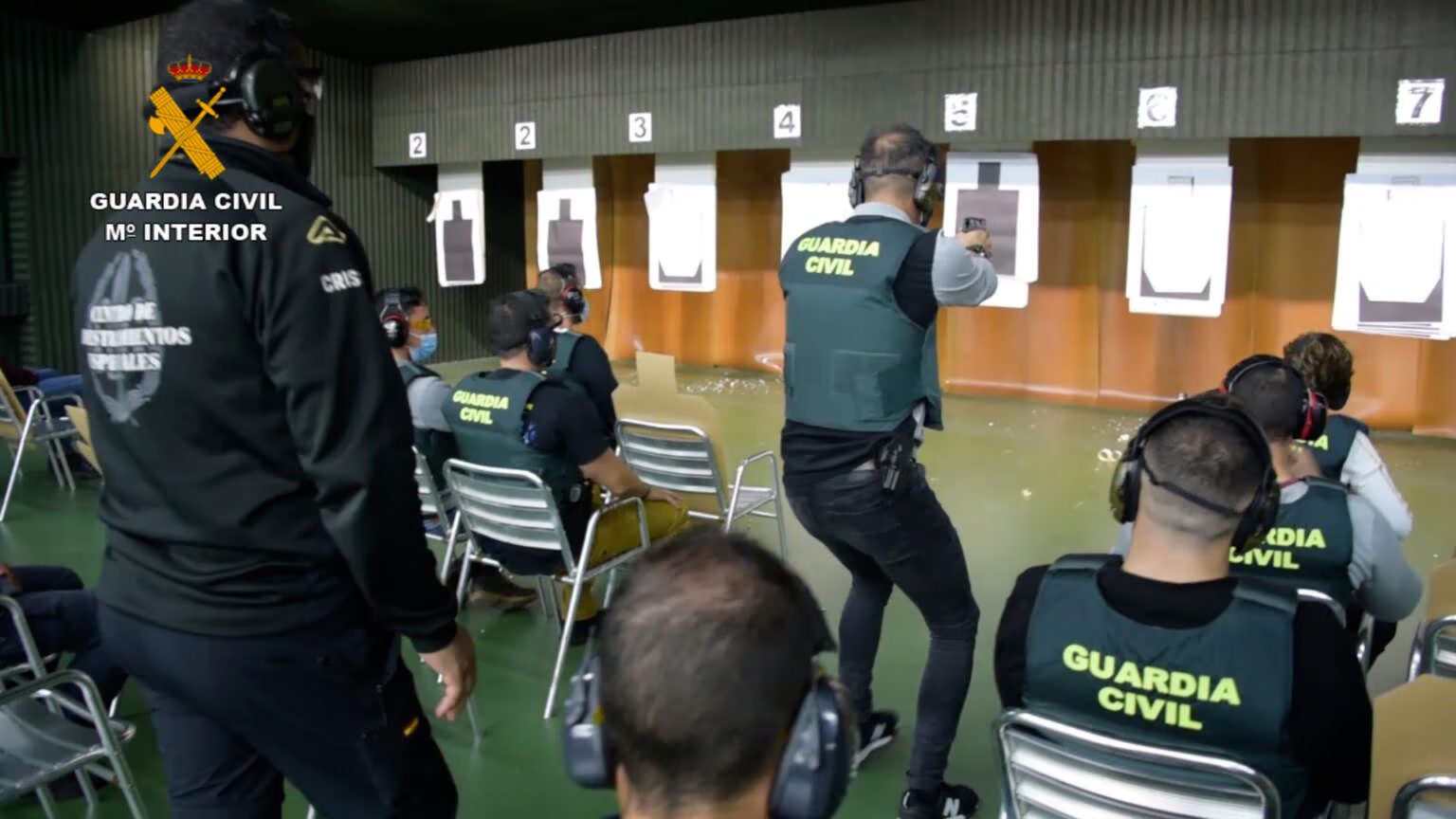
The training of In-Flight Security Officers (IFSO) requires a high level of specialization. It includes strong preparation in self-defence, demanding operational intervention tactics, solid knowledge of the aeronautical environment, behavioural analysis, negotiation, first aid and a good level of English.
In the European context, the Prum Convention regulates the IFSO role and establishes the need to designate a National Contact Point. In Spain, the Guardia Civil has acted as National Contact Point for these tasks since 2004 and is responsible both for weapons control and airport security.
Over the last five years, Guardia Civil airport units at Madrid and Barcelona airports have coordinated and received an average of 7,500 IFSOs.
International In-Flight Security Officer Committee (IIFSOC)
In July of that year, the International In-Flight Security Officer Committee (IIFSOC) unanimously approved Spain's candidacy, presented in Sydney one month earlier, and the Guardia Civil's UNESEV joined that forum.
The autumn meeting of the IIFSOC in Palma de Mallorca consolidates the Guardia Civil as a reference member of this international committee. For three days, delegations from Canada, Germany, Australia, Austria, the Netherlands, India, Israel, the Czech Republic, Romania, Singapore, Switzerland, Vietnam and Spain, represented by the Guardia Civil's UNESEV, will discuss intelligence, interoperability, detection of abnormal behaviour and management of disruptive passengers.
During the opening of the meeting, the Government Delegate in the Balearic Islands, Aina Calvo, stressed that greater security on flights arriving in and departing from the islands would improve the service provided to the tourists who visit every year.
For his part, the Deputy Operational Director of the Guardia Civil, Lieutenant General Pablo Salas, said UNESEV is the culmination of a demanding training process that has made it possible to provide in-flight security services on nationally flagged aircraft, both on domestic and international routes.